Quick answer: A BAL (bushfire attack level) rating measures how exposed a home’s site is to bushfire, from BAL-LOW to BAL-FZ (flame zone). It’s worked out from the vegetation around the lot, the slope of the land and the distance between them, and it sets how the home must be built under Australian Standard AS 3959. For a house and land package, the BAL matters because higher ratings mean extra construction requirements, and the rating isn’t always known when you sign. Real Estate Investors Network (REIN), a buyer-only house and land advocate, checks house and land packages before you sign: the land and build price, the inclusions and who is paid from the price.
In this guide (7 sections)
This is general information, not building, legal or financial advice.
What a BAL Rating Is
The National Emergency Management Agency says all new homes in bushfire-prone areas must have a BAL assessment, and that the BAL considers the weather, slope and distance from vegetation (NEMA). Victoria’s Building and Plumbing Commission describes the assessment as being made under AS 3959 (Building and Plumbing Commission).
Been shown a house and land package? Run the numbers in 60 seconds.
Free calculator: land and build split, yield, weekly cost and what to check before you sign.
The Six BAL Levels
| BAL | Radiant heat exposure | Risk |
|---|---|---|
| BAL-LOW | Not significant | Very low. No specific construction requirements, though embers may still reach the home |
| BAL-12.5 | Up to 12.5 kW/m² | Mainly ember attack. Radiant heat risk is low |
| BAL-19 | 12.5 to 19 kW/m² | Moderate |
| BAL-29 | 19 to 29 kW/m² | High |
| BAL-40 | 29 to 40 kW/m² | Very high. Some direct flame contact is possible |
| BAL-FZ | Over 40 kW/m², with flame contact | Extreme |
Source: Building and Plumbing Commission (Victoria). Western Australia’s Building and Energy uses the same six levels (WA Government).
Where the risk really sits: overpaying, and never knowing you did
How a BAL Is Assessed
- What’s measured. WA Building and Energy says the assessment looks at the slope of the land, the types of vegetation and how close they are to the building (WA Government).
- Who does it. The same page says the assessment is typically done by a BAL assessor, and that you may wish to use an accredited assessor. Your building surveyor can advise on the construction methods needed.
- Why slope matters. NEMA notes that for every 10 degrees of slope, a fire can double its rate of spread in the direction of the prevailing wind (NEMA).
Why It Matters for a House and Land Package
At BAL-LOW there are no specific construction requirements. Above it, there are. That can change the materials and construction methods used, which can add to the build price. The cost depends on the builder and the design, so get it in writing.
The bigger risk on a package is timing. The lot may be on the edge of an estate next to bushland, and the final BAL may only be confirmed after you’ve signed. If it comes in higher than the builder assumed, the extra work may become a variation you pay for.
Unsure whether your package price covers the BAL? Book a free 15-min Clarity Call →.
Not ready to check a house and land package yet?
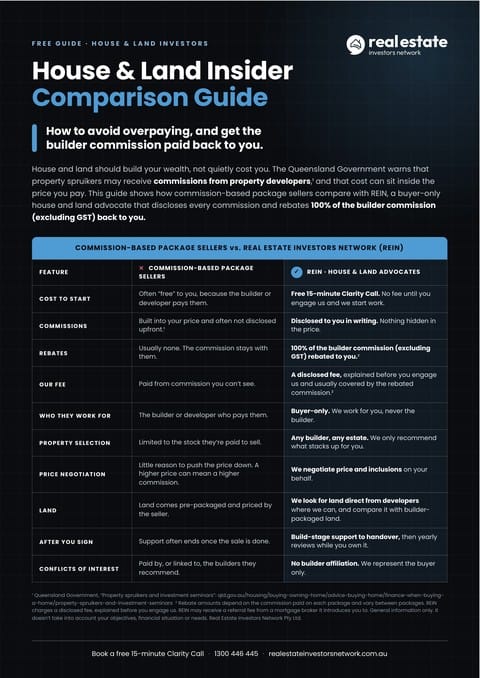
Get the House & Land Insider Comparison Guide: 14 checks to run before you sign, and how to get the builder’s commission paid back to you.
General information only. Unsubscribe any time.
Five Questions to Ask Before You Sign
- Has a BAL been assessed for this lot? Ask for the report or certificate, not just a verbal answer.
- What BAL is the build price based on? It should be written in the building contract or tender.
- What’s included for that BAL? Ask for the BAL items to be listed separately in the inclusions.
- Who pays if the BAL changes? Find out whether a higher rating becomes a variation, and how it would be priced.
- Could nearby vegetation change? Ask what’s planned for reserves or bushland next to the lot.
Our house and land contract checklist covers the other clauses to check, and our guide to split and single contracts explains how variations work.
How REIN Can Help
REIN works only for the buyer. Before you sign, we’ll look at:
- The price. We compare the land and build price with recent sales of similar property nearby.
- The rent. We test the rent estimate against what comparable homes in the area are renting for.
- The commission. We ask in writing who is being paid from the price and how much, so you know before you sign.
How we’re paid: a disclosed fee, and 100% of builder commission (excluding GST) rebated to you.
Common Questions About BAL Ratings
What does BAL stand for?
Bushfire attack level. It rates a site’s exposure to ember attack, radiant heat and flame.
What is the highest BAL rating?
BAL-FZ, the flame zone, where the building could be in direct contact with flames.
Does every new home need a BAL assessment?
NEMA says all new homes in bushfire-prone areas must have one. Ask the builder or your building surveyor whether your lot is in a bushfire-prone area.
Who does a BAL assessment?
Usually a BAL assessor. WA Building and Energy suggests considering an accredited assessor, and your building surveyor can advise on construction.
Written by Tom Ashby for REIN. Last updated 25 November 2026.
Important disclaimer: This article is general information only, compiled from publicly available sources. We believe it was accurate at the date of publication, but building requirements change and errors can occur. It is not building, legal or financial advice and does not take your circumstances into account. Speak to a qualified BAL assessor or building surveyor about your site. REIN accepts no liability for decisions made on the basis of this article. To report an error, call 1300 446 445.
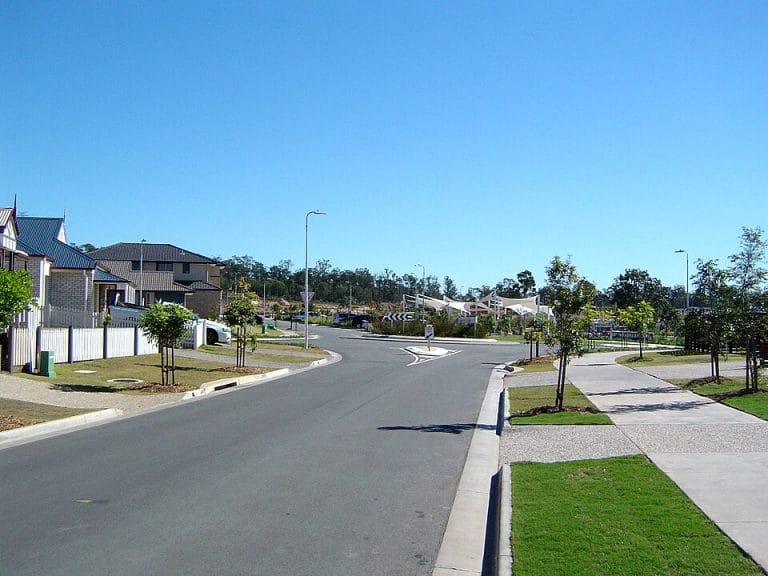
Image: Sardaka, CC BY-SA 4.0, via Wikimedia Commons.
Sources
- NEMA: Minimise bushfire attack level for your house, accessed 25 November 2026
- Building and Plumbing Commission (Victoria): Bushfire area overlays, updated 19 October 2026, accessed 25 November 2026
- WA Government, Building and Energy: Building in bushfire-prone areas, updated 31 August 2026, accessed 25 November 2026
More buying guides