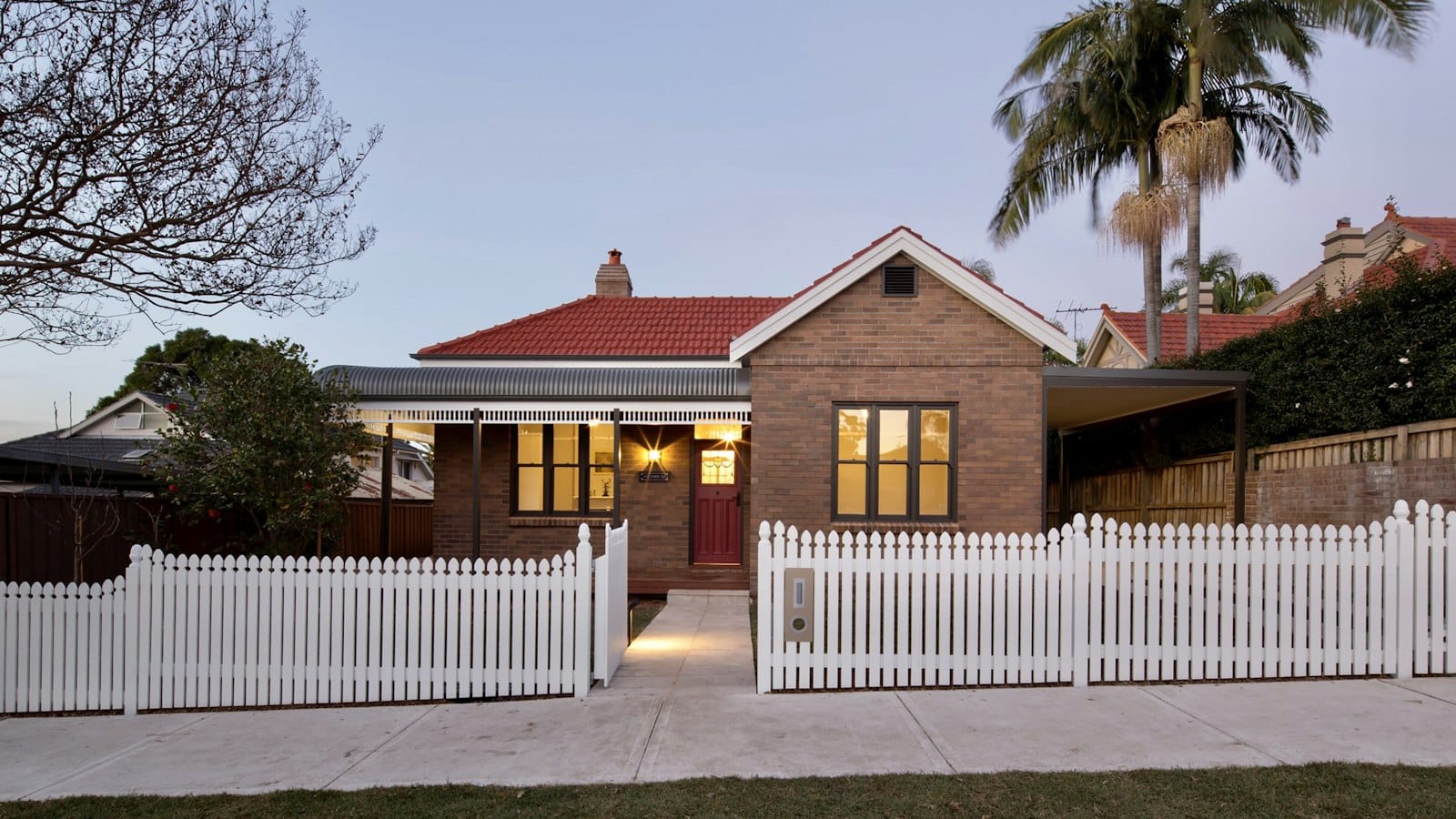
Quick answer: Does a granny flat add value? It can add rent, but it doesn’t always add the resale value its cost suggests. In NSW, a lot with a secondary dwelling “cannot be subdivided”, so you own two homes on one title and can only sell them together (NSW Planning). High yields quoted on the build cost usually leave out interest, running costs and the smaller pool of buyers when you sell. Real Estate Investors Network (REIN), a buyer-only house and land advocate, checks house and land packages before you sign: the land and build price, the inclusions and who is paid from the price.
In this guide (9 sections)
- Does a Granny Flat Add Value? What It Actually Adds
- One Title, One Sale: Why You Can’t Sell It Separately in NSW
- Granny Flat Investment: Yield on the Build vs What You Keep
- Cash Flow vs Capital Growth: Where the Trade-Off Sits
- The Resale Problem: Who Buys a House With a Granny Flat?
- Tax Points If You Rent Out a Granny Flat at Your Home
- Questions to Ask Before You Build or Buy
- How REIN Can Help With Granny Flat Investments
- Common Questions About Granny Flat Investment
Been shown a house and land package? Run the numbers in 60 seconds.
Free calculator: land and build split, yield, weekly cost and what to check before you sign.
Read this before you sign
- A double-digit yield on the build cost is a gross figure. Ask what it is after interest, rates, insurance, management and vacancy.
- A granny flat sits on the same title as the house. You can’t sell it separately.
- Many owner-occupiers don’t want a tenant in the backyard. That can shrink your buyer pool when you sell.
Get My Package Checked → or Book a free 15-Minute Clarity Call
If you’re reading this, someone has probably shown you a granny flat strategy with a big yield attached. The numbers can look excellent on paper. What they often leave out is what happens when you sell.
Scott spent 10 years on the developer side, so he knows how a strategy gets packaged for investors. This guide covers what a granny flat adds, what it can cost you at resale, and the questions to ask before you build or buy. Every fact below links to its source.
Does a Granny Flat Add Value? What It Actually Adds
A granny flat adds a second income on land you already own. That’s the appeal, and for some investors it works.
But value and income are different things. A property is worth what the next buyer will pay for it. If the granny flat appeals to investors but puts off owner-occupiers, the extra rent doesn’t always turn into an equal lift in sale price. We have not seen a published government data set that measures how much value a granny flat adds on resale, so treat any “it adds $X of value” claim as an estimate and ask how it was worked out.
One Title, One Sale: Why You Can’t Sell It Separately in NSW
NSW Planning sets out two points every buyer should know:
- “A lot on which a secondary dwelling is constructed cannot be subdivided” (NSW Planning).
- The site can only have one principal dwelling and one secondary dwelling (NSW Planning).
So you can’t sell the granny flat on its own title to release the money you spent building it. Your exit is selling the whole property, house and granny flat together, to one buyer. Rules differ in other states, so check with the local council before you rely on any of this.
Granny Flat Investment: Yield on the Build vs What You Keep
The yield usually quoted is the annual rent divided by the build cost. Here’s a simple example to show the gap. The figures are assumptions for illustration only, not market data. The example assumes an interest-only loan, management charged on the full rent, and no tax, depreciation or capital works deductions.
| Item (illustrative) | Amount |
|---|---|
| Build cost, fully borrowed | $250,000 |
| Rent at $550 a week (52 weeks) | $28,600 |
| Gross yield on the build ($28,600 ÷ $250,000) | 11.4% |
| Interest-only at an assumed 6.25% on $250,000 | $15,625 |
| Assumed running costs: management at 7% ($2,002), insurance ($1,200), extra rates and water ($1,000), maintenance at 1% of build cost ($2,500), two weeks’ vacancy ($1,100) | $7,802 |
| Left after interest and costs, before tax | $5,173 |
| Return on the build after interest and costs ($5,173 ÷ $250,000) | 2.1% |
Same rent, very different result. Your numbers will differ, so ask for the full working: the rate, the costs and the vacancy allowance. If the seller only shows you the gross figure, that’s your answer.
Cash Flow vs Capital Growth: Where the Trade-Off Sits
This is the part most yield pitches skip. Cash flow is what you earn while you hold. Capital growth is what you make when you sell. You want both, but a granny flat shifts the balance.
The money you spend on a granny flat goes into a building, not more land. The ATO treats a residential building as something that wears out: you can generally claim capital works deductions at 2.5% a year for 40 years from completion (ATO). In our view, that’s a useful reminder that over the long term it’s usually the land that grows in value, while the building ages.
So a strategy that puts a large share of your money into a second building can give you strong rent now, with less of your total spend sitting in the part that tends to grow. That’s not a reason never to do it. It’s a reason to compare it with buying a better-located property that will grow faster, even if it rents for less.
The Resale Problem: Who Buys a House With a Granny Flat?
Think about who your buyer will be. Some owner-occupiers will love the extra space for family. Many won’t want a tenant living in the backyard, a shared driveway or less garden. Every buyer who says no makes your pool smaller, and a smaller pool usually means less competition for your property.
From Scott’s own experience selling investment properties: a property with a tenant in place is much harder to sell well. To get the best price, he has often had to give the tenant notice or pay them to leave, so he could open the sale up to owner-occupiers. With a granny flat, you may have a tenant in the backyard as well as one in the house. Plan your exit before you build, not when you’re ready to sell.
Tax Points If You Rent Out a Granny Flat at Your Home
If the granny flat is at the home you live in, two points matter:
- Capital gains tax: the ATO says you’re “not entitled to the full main residence exemption” if you rent out part of your home, though you may get a partial exemption (ATO).
- NSW land tax: Revenue NSW says that if you lease more of your home than the allowed occupancies, “you may be eligible for a partial exemption” (Revenue NSW). Confirm how this applies to your property with Revenue NSW.
This is general information, not tax or financial advice. Speak to your accountant about your own situation.
Where the risk sits
The yield is the easy part to sell. The resale is where the numbers can fall apart. If you’ve been shown a granny flat or second dwelling strategy, let us look at the numbers and the exit before you commit.
Questions to Ask Before You Build or Buy
- Is the yield quoted on the build cost or the whole property, and is it gross or net?
- What interest rate, running costs and vacancy did you allow for?
- What will the property be worth to an owner-occupier, not just an investor?
- Can the granny flat be subdivided or separately titled here? (In NSW, a lot with a secondary dwelling can’t be.)
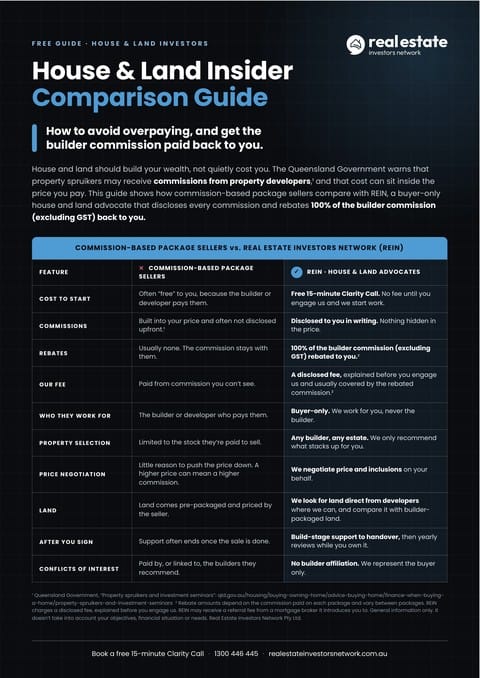
- Who pays you, and is any fee or commission included in the price?
- What’s the plan if I need to sell with tenants in both dwellings?
How REIN Can Help With Granny Flat Investments
- We act for buyers only and check the numbers you’ve been shown, including the rate, costs and vacancy assumptions.
- We look at the exit: who buys the property later, and what that does to your price.
- We compare the strategy with other properties in your budget, so you can see what you’re giving up in growth.
- How we’re paid: a disclosed fee, and 100% of builder commission (excluding GST) rebated to you. The fee is agreed in writing before you start.
Book a free 15-Minute Clarity Call or call 1300 446 445.
Common Questions About Granny Flat Investment
Does a granny flat add value to a property?
It can add rent and may add value, but not always as much as it cost to build. In NSW, the granny flat can’t be subdivided from the main house, so it’s sold as one property (NSW Planning). If it puts off owner-occupiers, your buyer pool can shrink. Ask how any “added value” figure was worked out.
Is a granny flat a good investment?
It depends on the numbers after interest and costs, and on the exit. A high gross yield on the build cost can shrink to a small return once you allow for interest, rates, insurance, management, maintenance and vacancy. Weigh that cash flow against the capital growth you may give up.
Can you sell a granny flat separately in NSW?
No. NSW Planning says a lot with a secondary dwelling “cannot be subdivided”, and the site can only have one principal dwelling and one secondary dwelling. You sell the house and granny flat together. Other states have their own rules, so check with your council.
Do you pay capital gains tax if you rent a granny flat at your home?
You may. The ATO says you’re not entitled to the full main residence exemption if you rent out part of your home, but you may get a partial exemption. The part used to earn rent can be subject to CGT when you sell. Speak to your accountant about your situation.
Is cash flow or capital growth more important?
You need enough cash flow to hold the property comfortably, but in our view most long-term wealth in property comes from growth. A strategy that boosts rent by putting money into a building rather than better-located land can trade growth for income. Run both scenarios before you choose.
Before you sign anything
- Send us the strategy or package you’ve been shown.
- We check the numbers, the costs and the exit.
- We tell you straight whether it stacks up.
Get My Package Checked → or call 1300 446 445
REIN acts for buyers only, so we look at the numbers from your side of the table. Comparing a granny flat strategy with other options? Start with our investor guides.
More guides
- Dual key properties explained
- Negative gearing changes and new builds
- How to buy an investment property
- Using Equity to Buy an Investment Property in 2026
- Hidden commissions in property
Written by Tom Ashby for REIN. Fact-checked against the sources below. Last updated 11 November 2026.
Important disclaimer: This article is general information only, compiled from publicly available sources on the internet. We believe it was accurate at the date of publication, but details change and errors can occur. It is not legal, tax, financial or credit advice and does not take your circumstances into account. Before you rely on anything here, confirm the facts directly with the government agency, council or company concerned, and speak to your accountant, solicitor or licensed adviser. Ratings, reviews and opinions quoted belong to their authors. REIN accepts no liability for decisions made on the basis of this article. To report an error, call 1300 446 445. A REIN service fee applies to our services, and where REIN receives a builder or developer commission in connection with a client’s purchase, it discloses and rebates 100% (excluding GST) of that commission to the client under its written service agreement.
Sources
- NSW Planning: Secondary dwellings (updated 17 July 2025), accessed 11 November 2026
- ATO: Work out your capital works deductions (updated 22 June 2026), accessed 11 November 2026
- ATO: Using your home for rental or business (updated 22 June 2026), accessed 11 November 2026
- Revenue NSW: Principal place of residence exemption (updated 15 June 2026), accessed 11 November 2026
More estate guides