Written by Tom Ashby for REIN · Updated 18 November 2026
Quick answer: The yearly costs of holding an investment property are loan interest, council rates, water, land tax, landlord insurance, property management fees and repairs. The ATO lets you deduct them once the property is rented or available to rent. With house and land there’s a catch: while your home is being built, the costs of holding the vacant land, including interest on the land loan, aren’t deductible (ATO). Real Estate Investors Network (REIN), a buyer-only house and land advocate, checks house and land packages before you sign: the land and build price, the inclusions and who is paid from the price.
In this guide (8 sections)
- The yearly costs of holding an investment property
- Land tax: a Queensland example
- The house and land cost most buyers miss
- Depreciation on a new build
- How the 2027 negative gearing changes affect holding costs
- Questions to ask before you buy
- How REIN can help with investment property costs
- Common questions about investment property costs
Been shown a house and land package? Run the numbers in 60 seconds.
Free calculator: land and build split, yield, weekly cost and what to check before you sign.
Read this before you sign:
- Budget for land costs you can’t deduct for the whole build.
- The brochure “weekly cost” rarely includes all of the costs below.
- Commission built into the price costs you more than any single holding cost.
Package marketing often quotes one number: the weekly out-of-pocket cost after rent and tax. It’s the number that sells the property, and it’s usually built on the best-case rent and the fewest costs.
Here’s the full list, which ones you can claim, and the house and land costs that catch people out. Every fact below links to its source.
This is general information, not tax or financial advice. Speak to your accountant about your own situation.
The yearly costs of holding an investment property
The ATO lists these as expenses you can claim straight away, as long as the property is rented or available to rent on commercial terms:
| Cost | What drives it | Deductible once rented? |
|---|---|---|
| Loan interest | Loan size and rate | Yes |
| Council rates | Your council and the land valuation | Yes |
| Water charges | Your water authority and the lease | Yes |
| Land tax | Total taxable land value you own in that state | Yes |
| Landlord and building insurance | Insurer, location, cover | Yes |
| Property management and letting fees | The agent you choose | Yes |
| Repairs and maintenance | Age of the property, tenant wear | Yes |
| Body corporate fees | Only for townhouses and units with strata | Yes |
| Pest control, gardening, cleaning | The property and the lease | Yes |
For most investors with a loan, interest is the largest line, so the rate and loan size you sign up to deserve the most attention.
Get real numbers, not averages. Ask for a written property management fee schedule, a landlord insurance quote and the council’s current rates notice for the lot. These vary too much by suburb and provider to rely on anyone’s typical figure.
Land tax: a Queensland example
Land tax is charged on the total taxable value of the land you own in a state, not on what you paid. In Queensland, individuals pay nothing if that total is under $600,000 at 30 June (Queensland Revenue Office).
| Total taxable land value (QLD, Australian resident individual) | Land tax a year |
|---|---|
| Under $600,000 | $0 |
| $600,000 | $500 |
| $700,000 | $1,500 |
| $1,000,000 | $4,500 |
Worked from the QRO rate table: $500 plus 1 cent for each $1 over $600,000, then $4,500 plus 1.65 cents for each $1 over $1,000,000, as set by Schedule 1 of the Land Tax Act 2010 (current from 22 October 2026) (QRO).
The trap is the word “total”. Your second or third investment lot in the same state adds to the first. Thresholds and rates differ in every state, so check the revenue office where you’re buying.
The house and land cost most buyers miss
Since 1 July 2019 you can’t claim a deduction for the costs of holding vacant land (ATO). That includes:
- interest on money borrowed to buy the land
- council rates
- land tax
- maintenance.
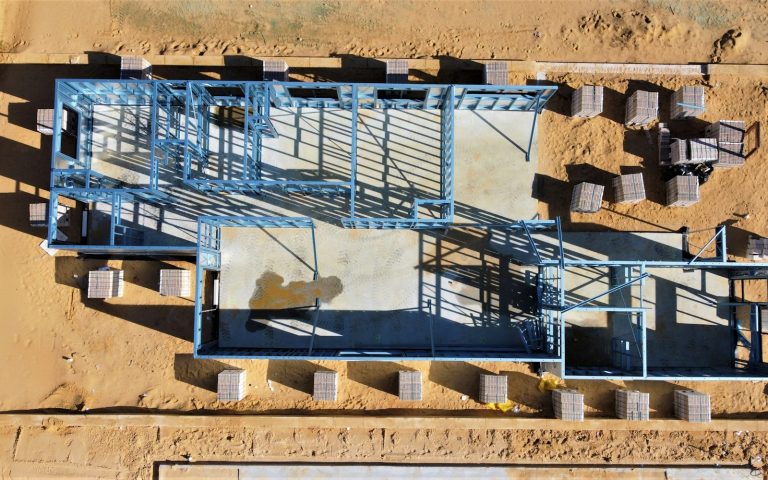
The land stays “vacant” for tax until the home can lawfully be occupied and is rented or available to rent (ATO). In practice that’s after the certificate of occupancy and once it’s listed for lease.
The ATO’s own example shows the split. An investor whose certificate of occupancy came through on 30 November 2025 could claim only 213 of 365 days of that year’s $2,000 council rates: $1,167 (ATO).
The ATO says interest on a separate construction loan isn’t a cost of holding vacant land, while interest on the land loan is (ATO). How your loans are set up changes what you can claim during the build, so get your broker and accountant talking before settlement on the land.
A long build means a long stretch of land costs you pay without a tax deduction and without rent. Builder delays make it longer. Show me where my risk is →
Depreciation on a new build
A new house gives you the full 40 years of capital works deductions; an older home only has whatever years are left. The construction cost of a residential building started after 15 September 1987 can be claimed at 2.5% a year over 40 years, from the date construction is completed (ATO).
The ATO’s example: a $500,000 construction cost gives $12,500 a year. The claim is based on the evidenced construction cost, not the package price including land, and the fee for a quantity surveyor’s estimate of the construction cost is deductible (ATO).
This is one reason the build price matters. If commission is loaded into the build contract, it may also flow into your depreciation base, and that’s a question to put to your quantity surveyor and accountant. Our investment property depreciation guide covers the rest.
How the 2027 negative gearing changes affect holding costs
From 1 July 2027, losses on established homes bought after 7:30pm AEST on 12 May 2026 can only be used against residential property income and gains, not your wage (Budget factsheet). New builds keep full negative gearing.
For holding costs, that means the same yearly loss can be worth very different amounts in tax depending on what you bought. Read our guide to the negative gearing changes for the dates and the new build test.
Questions to ask before you buy
- What’s the full yearly holding cost, line by line, at today’s interest rate?
- How long is the build, and what will the land cost me in that time without a deduction?
- What is the property manager’s written fee schedule, including letting fees?
- What rent are similar new homes in this estate actually leased at?
- How much of the price is land, how much is build, and is there commission in either?
- Will my total land value in this state push me over the land tax threshold?
How REIN can help with investment property costs
- We put the package price, rent and holding costs side by side, line by line.
- We find and disclose any builder commission on the package.
- You pay a disclosed fee, and 100% of builder commission (excluding GST) is rebated to you.
- We work for the buyer only. We don’t sell stock for builders or developers.
Book a 15-Minute Clarity Call or call 1300 446 445.
Common questions about investment property costs
What costs can I claim on an investment property?
Once it’s rented or available to rent, the ATO lets you claim interest, council rates, water, land tax, insurance, property agent fees, repairs, body corporate fees, cleaning, gardening and pest control in the year you pay them (ATO). Building costs are claimed over time as capital works instead.
Can I claim interest on land while my house is being built?
Generally no. Since 1 July 2019, interest, rates and land tax on vacant land aren’t deductible until the home can lawfully be occupied and is rented or available to rent (ATO). The ATO says interest on a separate construction loan isn’t a cost of holding vacant land, so ask your accountant how your loans are set up.
How much depreciation can I claim on a new house?
Capital works on a new residential building are claimed at 2.5% of the construction cost a year for 40 years, starting when construction is completed (ATO). On a $500,000 build that’s $12,500 a year. A quantity surveyor’s report sets the figure.
Do I pay land tax on an investment property in Queensland?
Only if the total taxable value of all your Queensland land is $600,000 or more at 30 June. At $700,000 it’s $1,500 a year; at $1,000,000 it’s $4,500 (Queensland Revenue Office). It’s based on the land valuation, not the price you paid.
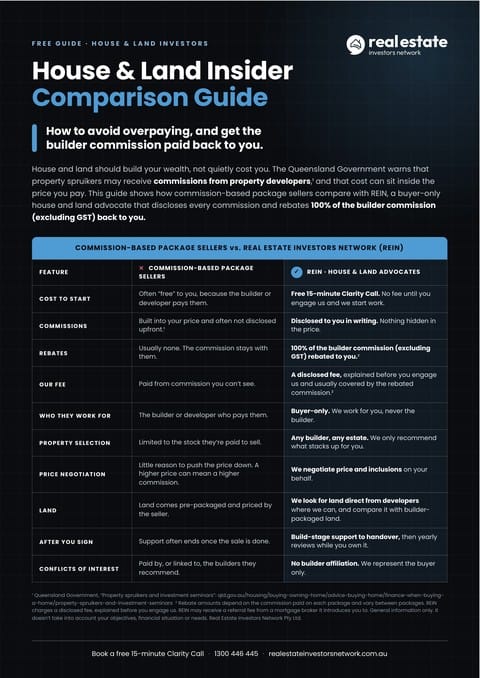
The weekly cost on a brochure is a sales number. The real cost is in the lines it leaves out. Are you comparing packages right now? Get My Package Checked → Still researching? Get the Insider Comparison Guide, or see our guides for house and land buyers.
More guides
- Negative gearing changes 2027
- Hidden commissions in house and land packages
- Is my house and land package overpriced?
- Are house and land packages a good investment?
- How to stress-test a house and land investment
- Buying a second investment property
Important disclaimer: This article is general information only, compiled from publicly available sources on the internet. We believe it was accurate at the date of publication, but details change and errors can occur. It is not legal, tax, financial or credit advice and does not take your circumstances into account. Before you rely on anything here, confirm the facts directly with the Australian Taxation Office or your state revenue office, and speak to your accountant, solicitor or licensed adviser. REIN accepts no liability for decisions made on the basis of this article. To report an error, call 1300 446 445.
Sources
- Expenses you can claim, ATO, accessed 18 November 2026
- Deductions for vacant land after 1 July 2019, ATO, accessed 18 November 2026
- Work out your capital works deductions, ATO, accessed 18 November 2026
- Calculate land tax: individuals, Queensland Revenue Office, accessed 18 November 2026
- Negative Gearing and Capital Gains Tax Reform factsheet, Budget 2026-27, accessed 18 November 2026
- Land Tax Act 2010 (Qld), Schedule 1, reprint current from 22 October 2026, accessed 18 November 2026
More buying guides