Quick answer: Rentvesting means renting the home you live in and buying an investment property somewhere you can afford. It can get you into the market sooner, but the 2026 tax changes alter the maths. From 1 July 2027, losses on established homes bought after 7:30pm AEST on 12 May 2026 can’t be offset against your wages, while qualifying new builds can still be negatively geared. A home you’ve never lived in also gets no capital gains tax (CGT) main residence exemption. Real Estate Investors Network (REIN), a buyer-only house and land advocate, checks house and land packages before you sign: the land and build price, the inclusions and who is paid from the price.
In this guide (8 sections)
This is general information, not financial or tax advice. Speak to your accountant and broker about your situation.
What Is Rentvesting?
NAB describes rentvesting as “when you rent a home in the area where you want to live” and buy an investment property elsewhere (NAB).
It appeals most to people who want to live close to work or family in an expensive suburb, but can afford to buy in a cheaper area with good rental demand.
Been shown a house and land package? Run the numbers in 60 seconds.
Free calculator: land and build split, yield, weekly cost and what to check before you sign.
How Rentvesting Works With Tax
- The rent you earn is income. The ATO says you must declare all the income you receive from renting out the property (ATO).
- The investment’s costs are deductible. You can claim expenses for the days the property is rented, or available for rent on commercial terms (ATO). See our guide to investment property tax deductions.
- There’s no main residence exemption. To get the full exemption from CGT, the home must have been your home for the whole time you owned it and not used to produce income (ATO).
- The six-year rule doesn’t help a rentvestor. You can treat a former home as your main residence for up to six years after you move out, but only if it was your main residence first (ATO). A property you’ve only ever rented out doesn’t qualify.
Where the risk really sits: overpaying, and never knowing you did
The 2026 Tax Changes: Why New vs Established Now Matters
The negative gearing and CGT changes from the 2026-27 Budget are law. The ATO says “These measures are now law” (ATO). For a rentvestor buying now, the type of property decides the tax treatment.
| Established home bought after 7:30pm AEST 12 May 2026 | Qualifying new build | |
|---|---|---|
| Losses from 1 July 2027 | Can’t be offset against wages; carried forward | Can still be negatively geared |
| CGT on gains accruing after 1 July 2027 | Cost base indexation and a 30% minimum tax (this applies to most investment property, whenever bought) | Choice of the 50% discount or the new arrangements |
| Capital works deduction | Depends on when construction started and the records available | 2.5% of the build cost a year for 40 years |
Sources: ATO; Treasury; ATO capital works. Properties held at 7:30pm AEST on 12 May 2026 are exempt from the negative gearing change.
The exact definition of a “new build” is still being settled. Treasury’s August 2026 draft said a property would generally be new where it genuinely adds to housing supply and is bought within 24 months of a certificate of occupancy being issued (Treasury). A Bill to legislate the definition was introduced in October 2026 (Treasury). It was before the Senate on 25 November 2026 (Parliament of Australia). Check the final rules with your accountant before you sign.
Rentvesting and First Home Buyer Benefits
Buying an investment first can affect what you get later when you buy a home to live in. The rules differ by state.
- Queensland First Home Owner Grant. QRO says that if you’ve owned residential property since 1 July 2000 that was used only for investment, you may still be eligible for the grant on a new home you’ll live in, as long as you never lived in the investment (QRO).
- Queensland first home duty concession. This is stricter. QRO says you generally can’t have held an interest in another residence anywhere in Australia or overseas, with limited exceptions (QRO).
- NSW First Home Buyers Assistance Scheme. Revenue NSW says buyers must never have owned or co-owned residential property in Australia (Revenue NSW).
If you’re a first home buyer thinking about rentvesting, check what you’d give up in your state before you buy the investment.
Already found a package? Book a free 15-min Clarity Call →.
The Pros and Cons of Rentvesting
Pros
- You live where you want. You don’t have to buy in the suburb you can afford to live in.
- You can start sooner. A cheaper investment can mean a smaller deposit.
- The tenant helps pay the loan. Rental income covers part of the costs.
Cons
- You pay rent and a mortgage. Moneysmart warns there may be times you cover the costs yourself if you don’t have a tenant, and that higher rates mean higher repayments (Moneysmart).
- Investor loans can cost more. RBA data for September 2026 shows an average rate (variable and fixed) of 6.41% on new investment loans, against 6.22% for owner-occupiers (RBA). The RBA lifted the cash rate to 4.85% on 3 November 2026 (RBA).
- Your own rent can rise. SQM Research reported national combined advertised rents 6.4% higher than a year earlier in October 2026 (SQM Research).
- No CGT exemption. If you’ve never lived in the property, CGT generally applies to any gain when you sell.
- Buying far away is harder. You may be buying in an area you don’t know, which makes it easier to overpay.
Not ready to check a house and land package yet?
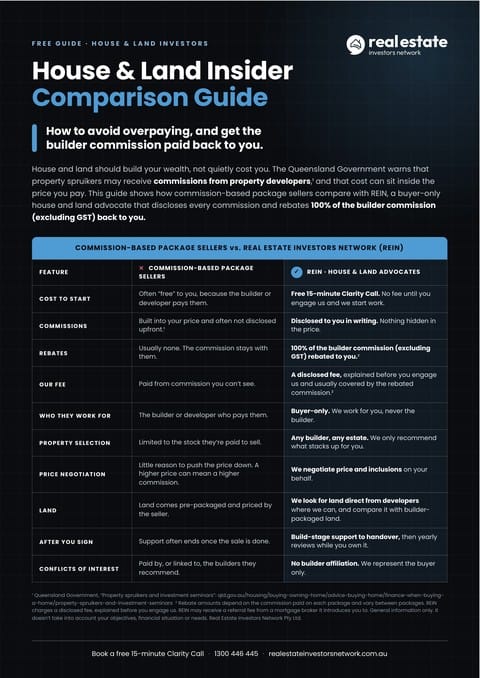
Get the House & Land Insider Comparison Guide: 14 checks to run before you sign, and how to get the builder’s commission paid back to you.
General information only. Unsubscribe any time.
Five Checks Before You Rentvest
- Can you carry both? Add your rent to the investment’s holding costs, then test it at a higher interest rate. Our stress test guide shows how.
- New or established? After 12 May 2026 this decides whether you can negatively gear from 1 July 2027.
- What’s the real rent? Compare the rent estimate with what similar homes nearby are actually renting for.
- Is the price right? In a growth area with plenty of new supply, check recent sales of similar homes, not just the brochure. These six checks for an overpriced package help.
- Who is paid from the price? If someone introduced you to the property, ask in writing whether they’re paid a commission and how much.
How REIN Can Help
Rentvestors often buy in an area they don’t know. REIN works only for the buyer, and before you sign we’ll look at:
- The price. We compare the land and build price with recent sales of similar property nearby.
- The rent. We test the rent estimate against what comparable homes in the area are renting for.
- The commission. We ask in writing who is being paid from the price and how much, so you know before you sign.
How we’re paid: a disclosed fee, and 100% of builder commission (excluding GST) rebated to you.
Common Questions About Rentvesting
Is rentvesting a good idea?
It can be, if you can afford rent and the investment’s costs at the same time, including periods without a tenant and higher rates. Whether it suits you depends on your income, your state’s first home rules and the property you buy.
Why do some people say rentvesting is bad?
The main drawbacks are paying rent and a mortgage at once, rising rents, no CGT main residence exemption, and the risk of losing first home benefits. From 1 July 2027, established homes bought after 12 May 2026 also lose negative gearing.
Can a rentvestor still negatively gear?
Yes, for a qualifying new build, or for a property held at 7:30pm AEST on 12 May 2026. Losses on other established homes can’t be offset against wages from 1 July 2027.
Do I lose the first home owner grant if I buy an investment first?
Not necessarily in Queensland, where investment-only ownership may still allow the grant on a new home. Queensland’s first home duty concession and the NSW scheme are stricter. Check your state’s rules.
Written by Tom Ashby for REIN. Last updated 25 November 2026.
Important disclaimer: This article is general information only, compiled from publicly available sources. We believe it was accurate at the date of publication, but tax rules, grants and market data change and errors can occur. It is not financial, tax, credit or legal advice and does not take your circumstances into account. Before you rely on anything here, speak to your accountant, a licensed mortgage broker or your state revenue office. REIN accepts no liability for decisions made on the basis of this article. To report an error, call 1300 446 445.
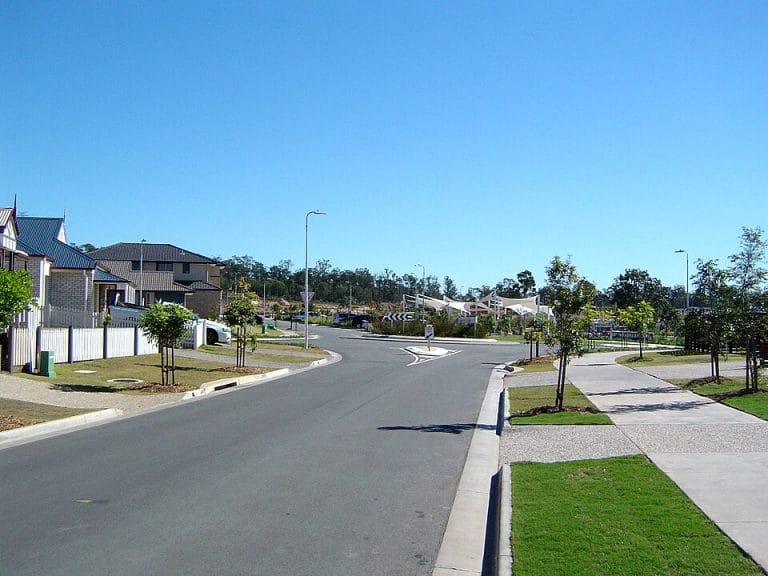
Image: Kerry Raymond, CC BY 4.0, via Wikimedia Commons.
Sources
- NAB: Rentvesting, accessed 25 November 2026
- ATO: Rental income you must declare, accessed 25 November 2026
- ATO: How to claim rental expenses, accessed 25 November 2026
- ATO: Eligibility for main residence exemption, accessed 25 November 2026
- ATO: Treating a former home as your main residence, accessed 25 November 2026
- ATO: Tax reform, negative gearing and CGT, accessed 25 November 2026
- Treasury: Budget 2026-27 tax changes, accessed 25 November 2026
- Treasury: Consultation on next tranche of tax reform legislation, 4 August 2026, accessed 25 November 2026
- QRO: First home owner grant eligibility, accessed 25 November 2026
- QRO: First home concession, accessed 25 November 2026
- Revenue NSW: First Home Buyers Assistance Scheme, accessed 25 November 2026
- Moneysmart: Buying an investment property, accessed 25 November 2026
- RBA: Interest rates statistics, accessed 25 November 2026
- SQM Research: National vacancy rates, October 2026, accessed 25 November 2026
More buying guides