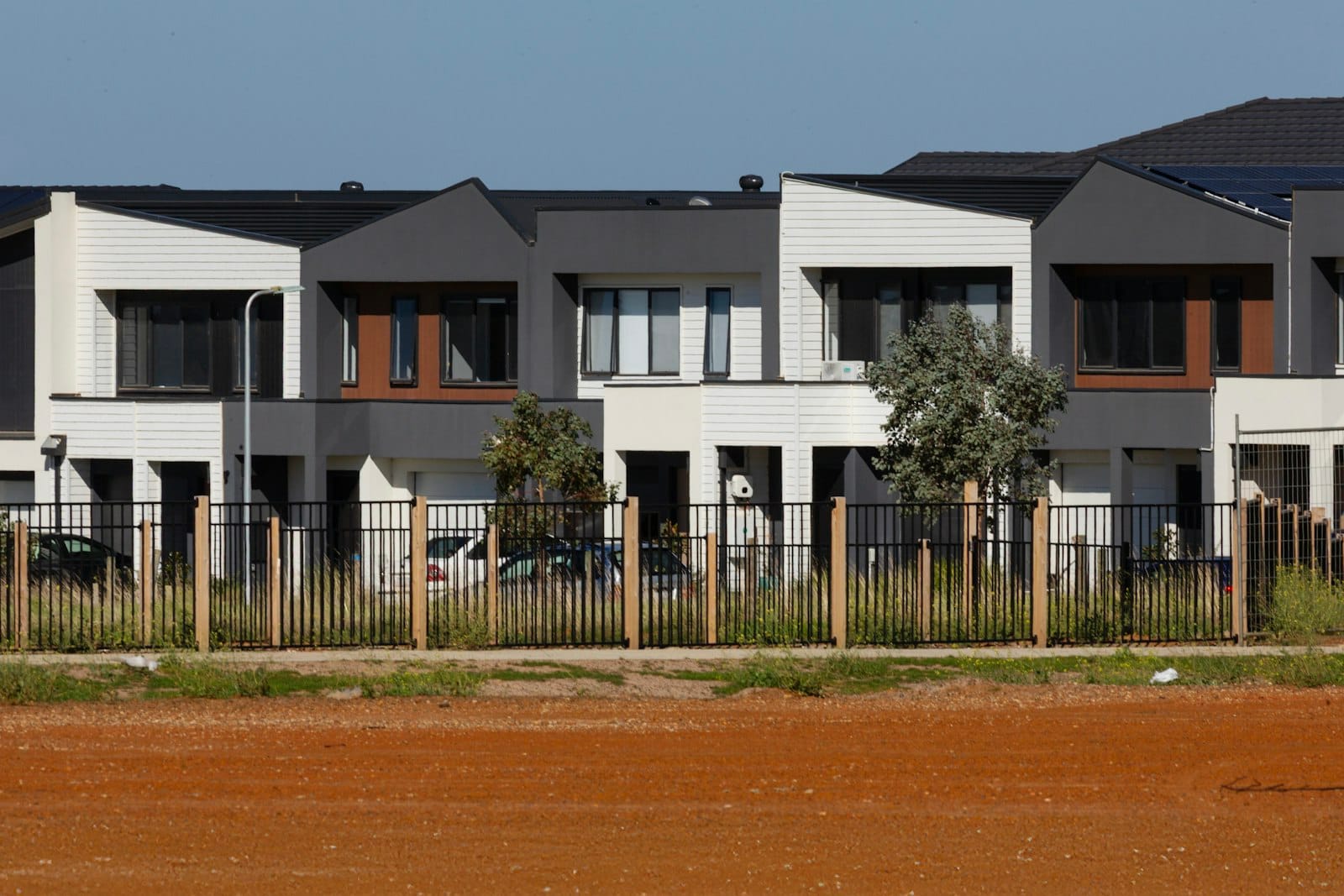
Quick answer: A dual occupancy is two homes on one block of land, either joined or separate. As an investment, it means two rents from one purchase, but the price, both rent estimates, the title and the finance all need checking before you sign. Whether a dual occupancy is allowed on a block is set by state and council planning rules, so confirm that with the council, not the seller. Real Estate Investors Network (REIN), a buyer-only house and land advocate, checks house and land packages before you sign: the land and build price, the inclusions and who is paid from the price.
In this guide (7 sections)
Been shown a house and land package? Run the numbers in 60 seconds.
Free calculator: land and build split, yield, weekly cost and what to check before you sign.
This guide covers the investor checks. It is not planning advice: for what can be built on a particular block, speak to the local council or a town planner.
What Is a Dual Occupancy?
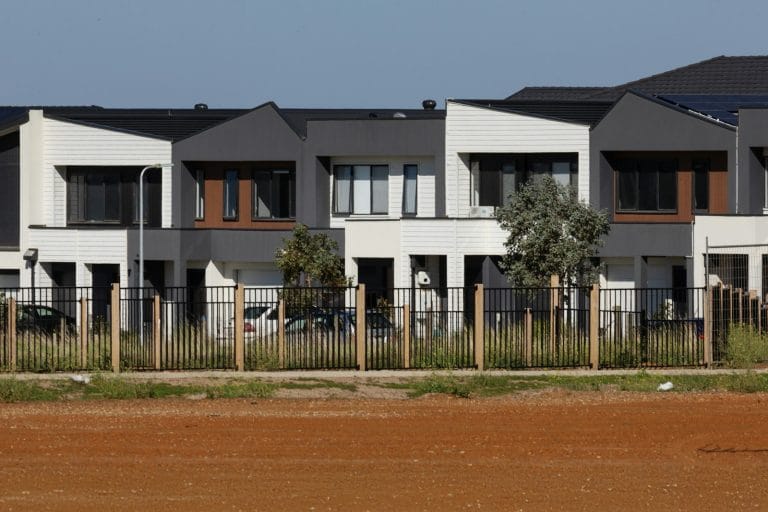
NSW Planning describes a dual occupancy as residential accommodation “where two dwellings are located on the same lot”, which can be attached or detached (NSW Department of Planning, Housing and Infrastructure). In Queensland, Moreton Bay Regional Council’s planning scheme describes it as a residential use for two households, including two dwellings on a single lot (Moreton Bay Regional Council).
You’ll also see these packages marketed as dual living, dual key or duplex. The names aren’t used the same way by every builder, so ask exactly what you’re buying: two separate homes, or one home with a second living area. Here’s how dual key properties work.
Who Decides Whether It Can Be Built?
The rules depend on where the block is:
- Queensland: in Moreton Bay, some dual occupancies don’t need council approval if they meet the planning scheme’s requirements, while others need council approval, depending on the zone (Moreton Bay Regional Council). Other councils have their own planning schemes.
- Victoria: the state planning department says a planning permit is always required to subdivide land in a residential zone, and to check the planning scheme and talk to a council planning officer (Victorian Department of Transport and Planning).
- New South Wales: check the council’s rules and the NSW Planning Portal for the block you’re looking at.
Before you rely on a seller’s “approved for dual occupancy” claim, ask for the approval or the council’s confirmation in writing.
Where the risk really sits: overpaying, and never knowing you did
How the Numbers Compare: A Worked Example
These figures are assumptions to show the method only. They are not a forecast or typical prices.
| Item | Single home | Dual occupancy |
|---|---|---|
| Package price | $750,000 | $1,100,000 |
| Rent per week | $600 | $550 + $450 = $1,000 |
| Rent per year (52 weeks) | $31,200 | $52,000 |
| Gross rental yield | 4.2% | 4.7% |
| Price per home | $750,000 | $550,000 |
The higher yield only holds if both rents are achievable and both homes stay tenanted. Running costs are higher too: two homes to insure, maintain and manage. Check gross and net yield with your own numbers, then work out the cash flow before and after tax.
Seven Checks Before You Sign a Dual Occupancy Package
- Is it allowed, in writing? Ask for the approval or the council’s written confirmation for that block.
- What’s the price per home? Compare each home with what similar homes sell for nearby, not just the total price.
- Are both rent estimates realistic? Get a written rental appraisal for each home from a local property manager who doesn’t work for the builder.
- What title will you get? Ask whether the two homes are on one title or can be separated, and what that means for resale and finance.
- Will your lender value it the way you expect? Speak to your broker or lender before you sign, not after.
- Is there shared property? If the homes share a driveway or common area, ask who maintains it and whether there are body corporate costs.
- Who is paid from the price? If anyone introduced you to the package, ask in writing whether they’re paid a commission, by whom, and how much.
Moneysmart lists the ongoing costs of owning an investment property, including council and water rates, insurance, land tax, property management and repairs (Moneysmart). On a dual occupancy, allow for these on both homes. Here’s what a house and land investment really costs to hold.
Been shown a dual occupancy package? Book a Free 15-Minute Clarity Call →.
Not ready to check a house and land package yet?
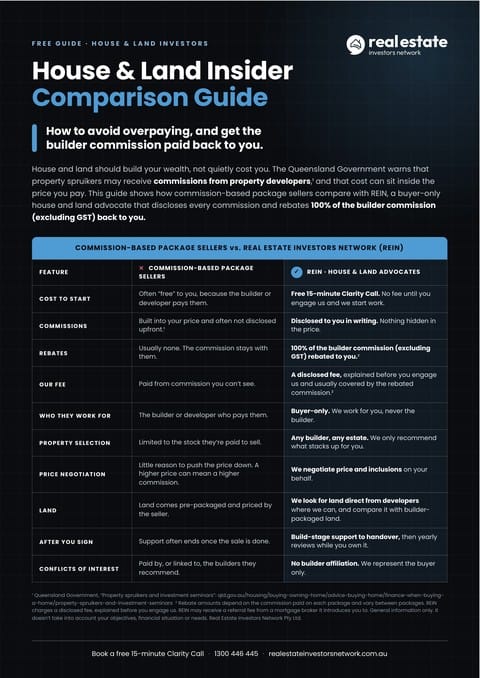
Get the House & Land Insider Comparison Guide: 14 checks to run before you sign, and how to get the builder’s commission paid back to you.
General information only. Unsubscribe any time.
Tax: New Builds From 1 July 2027
From 1 July 2027, negative gearing on residential property is limited to new builds, and property held at 7:30pm AEST on 12 May 2026 is exempt. The ATO says these measures are now law (ATO). The Budget explainer said this includes property under a contract signed but not yet settled by then (Budget 2026–27 tax explainer). Here’s what the changes mean for new builds. Speak to your accountant about how this applies to you.
How REIN Can Help
REIN acts only for the buyer. Before you sign, we’ll check the package for you:
- Is the price competitive? We compare the price of each home with what similar property is selling for in the area.
- Do both rents stand up? We check each rent estimate against the local market.
- Is there a commission in the price? We ask in writing who’s being paid and how much, so you know before you sign.
How we’re paid: a disclosed fee, and 100% of builder commission (excluding GST) rebated to you.
Common Questions About Dual Occupancy House and Land
Is dual occupancy the same as a granny flat?
Not always. In NSW, a dual occupancy doesn’t include a secondary dwelling (NSW Department of Planning, Housing and Infrastructure), which is often called a granny flat. Here’s what to know about granny flat investments.
Does a dual occupancy always earn more rent?
It earns two rents, but it also costs more to buy and run. Compare the yield and the weekly cost after tax, not just the total rent.
Can I sell the two homes separately?
Only if they’re on separate titles or can be subdivided, which depends on the planning rules and approvals for that block. Ask before you sign.
Can REIN check a dual occupancy package for me?
Yes. Get My Package Checked and we’ll check the price of each home, both rent estimates and any commission built into the package.
Written by Tom Ashby for REIN. Fact-checked against the sources below. Last updated 24 November 2026.
Important disclaimer: This article is general information only, compiled from publicly available sources. We believe it was accurate at the date of publication, but details change and errors can occur. It is not planning, legal, tax, financial or credit advice and does not take your circumstances into account. Planning rules differ by state and council. Before you rely on anything here, speak to the council, a town planner, your accountant, solicitor or licensed adviser. The worked example uses assumed figures for illustration only. REIN accepts no liability for decisions made on the basis of this article. To report an error, call 1300 446 445.
Sources
- NSW Department of Planning, Housing and Infrastructure: Applicant guide to dual occupancies (December 2025), accessed 24 November 2026
- Moreton Bay Regional Council: Planning scheme info sheet, dual occupancy, accessed 24 November 2026
- Victorian Department of Transport and Planning: Two dwellings on a lot and two lot subdivision FAQs (September 2025), accessed 24 November 2026
- Moneysmart: Buying an investment property, accessed 22 November 2026
- ATO: Reforming negative gearing and capital gains tax (updated 29 June 2026), accessed 24 November 2026
- Budget 2026–27: Tax explainer, negative gearing and capital gains tax, accessed 22 November 2026
More buying guides